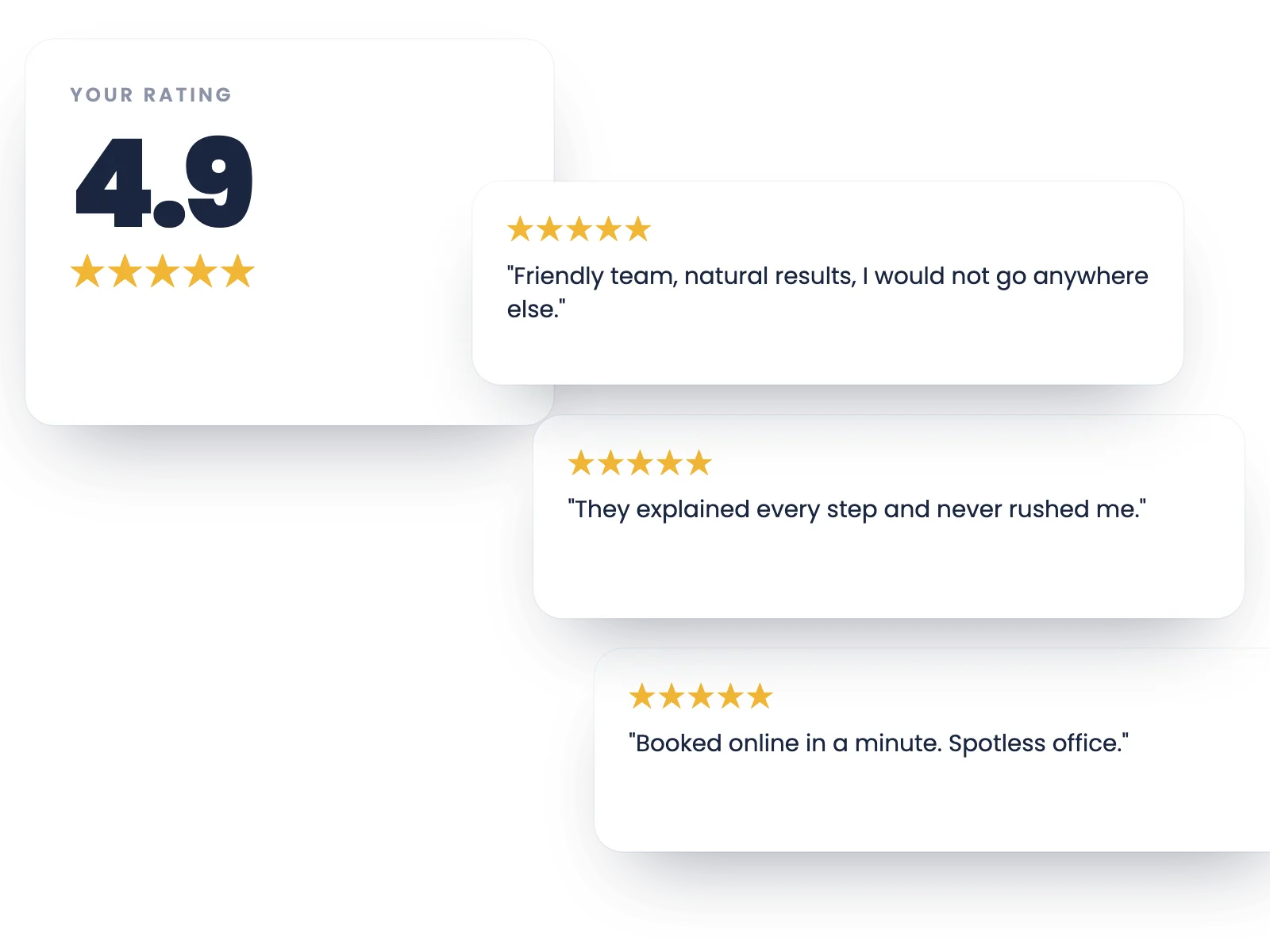
“Our experience with Urge was a complete transformation. From day one they were fully engaged, from revamping our website to social content, they delivered at every turn.”
Services · Reputation & Reviews
Reputation Management That Turns Reviews Into Patients
Your next patient is reading your reviews right now.
Before they call, they read. We help your practice earn a steady stream of five-star reviews, climb in local search, and respond to feedback without stepping on a legal landmine.
- A steady stream of five-star reviews
- Stronger local search ranking
- HIPAA-aware review responses
- Built for medical + aesthetic
OVERVIEW
Reputation management is the practice of building and protecting how a medical practice appears online, primarily through patient reviews. Reviews are a confirmed Google local-ranking signal, so a steady, recent stream lifts visibility in local search and Maps. In healthcare, review responses carry legal risk, because providers cannot disclose patient information when replying. Urge has guided medical practices since 2003.
The opening
Your reputation is being written without you
A patient looking for a new dermatologist, surgeon, or MedSpa does the same thing you do before booking a hotel. They read the reviews. Here is the trap most practices fall into.
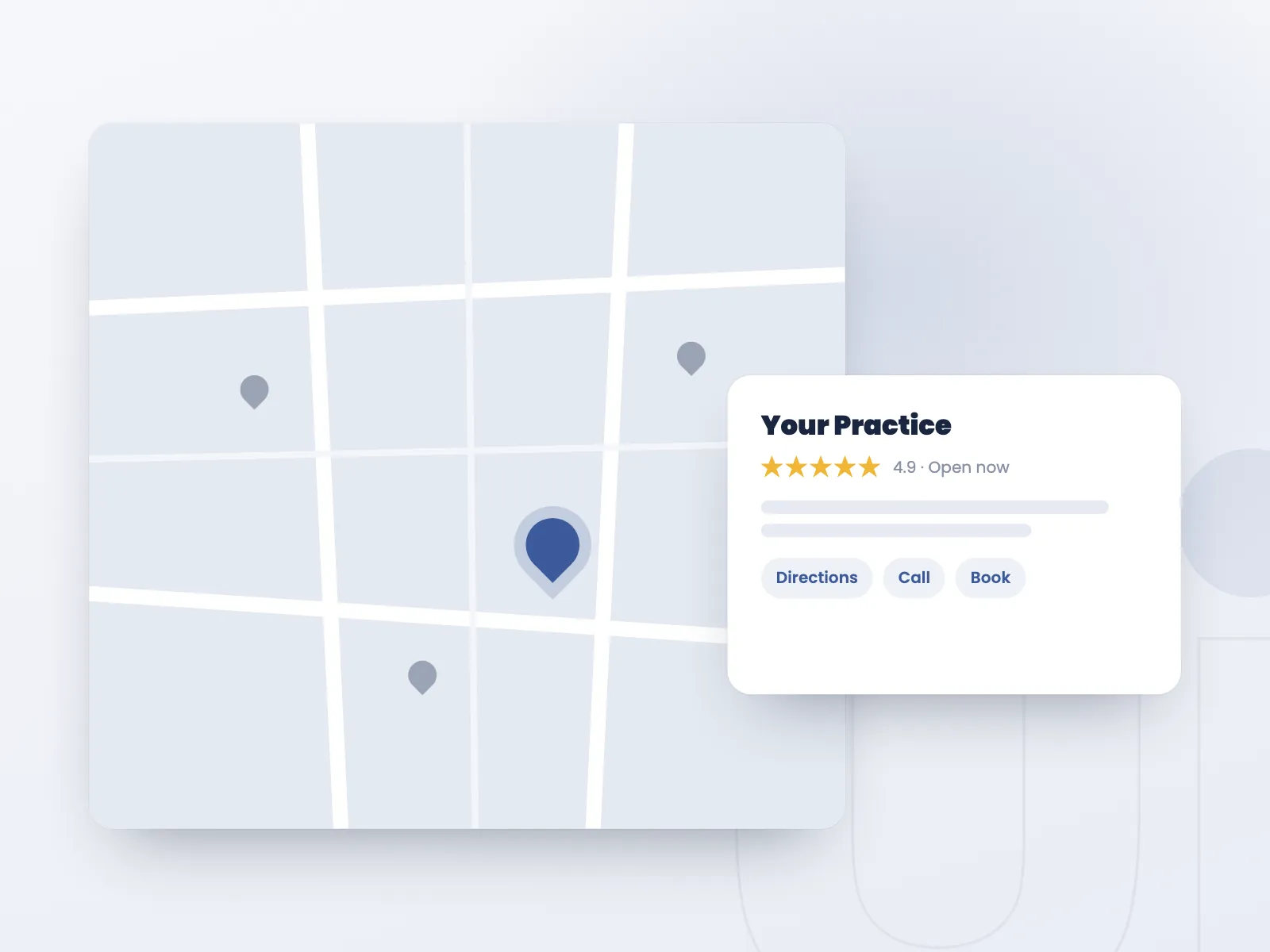
-
They read before they call. 76% of people say a positive online reputation influences which doctor they choose. [1]
-
Happy patients say nothing. The patients who love you say nothing, because happy people are busy being happy. The one patient who had a bad day writes three paragraphs.
-
Your worst moment gets a megaphone. Left alone, your public reputation becomes a megaphone for your worst moment and a whisper for your best work.
-
This is not luck. It is built. That is not a reflection of your care. It is a reflection of having no system. Reputation is not luck. It is built.
Reviews are not just social proof. They are a ranking signal.
Google says plainly that local results are based on relevance, distance, and prominence, and that more reviews and positive ratings can help your local ranking. [2] Prominence is the lever you can actually pull, and reviews are one of its strongest inputs. Recency matters too. A practice with a fresh, steady flow of reviews tends to outrank one sitting on a big but stale pile.
So a good review strategy does two things at once. It earns the trust that turns a searcher into a caller, and it feeds the signal that puts you in front of more searchers in the first place. That is why reviews and local SEO are the same conversation.
Can a medical practice respond to reviews without breaking HIPAA?
Yes, but the line is sharper than most practices realize, and crossing it is expensive.
In 2019, a Texas dental practice paid the HHS Office for Civil Rights $10,000 after it disclosed patient details while replying to a Yelp review. In 2022, a California dental practice paid $23,000 for the same kind of mistake, responding to negative reviews with patient names, treatment, and insurance information. The federal regulator’s message could not be blunter: providers cannot disclose protected health information when responding to online reviews. [3]
Here is the part that trips people up. You do not have to reveal a diagnosis to break the rule. Simply confirming that someone is your patient can be a violation, even when they named themselves first. So the instinct to defend yourself with “actually, you came in for X and we did Y” is precisely the instinct that writes the check to OCR.
The safe pattern is simple once you know it: respond promptly and warmly, never confirm care details or that the person is a patient, and move every specific offline. Something like, “We take this seriously and would love the chance to make it right. Please call our office directly.” It protects the patient, protects you, and reads to every other reader as a practice that handles criticism with grace.
This is the difference between a generic review tool and an agency that lives in medical. We have guided practices through this since 2003, and we build your response approach with HIPAA in mind from the start.
Two decades in medical + aesthetic
Reputation tools are a commodity. Knowing the medical rules around them is not.
A generic agency sees reviews as a numbers game. We see the whole board: the local-SEO signal, the patient psychology, and the federal privacy rules that turn a well-meaning reply into a five-figure mistake. We have spent more than two decades, since 2003, inside aesthetic and medical practices, which is exactly why we steer you around the traps a generalist walks straight into.
That is the Urge difference on this page. Anyone can get you more reviews. We get you more reviews, a better ranking, and a response strategy that keeps you out of trouble.
Reviews are a revenue and ranking engine
They feed Google local ranking and they decide whether a patient calls. A good review strategy earns the trust that turns a searcher into a caller and feeds the signal that puts you in front of more searchers.
Responding is a legal minefield
In healthcare, providers cannot disclose patient information when replying. Real OCR settlements prove it. We build your response approach with HIPAA in mind from the start.
You can grow reviews the right way
Asking is allowed; gating and incentives are not. We build a compliant, steady stream that grows volume without putting your profile, or your practice, at risk.
What's included
Everything your reputation needs to book patients
A team that knows the medical rules, not just the software, running the full discipline so it works whether you are thinking about it or not.
A steady, compliant stream of reviews
A steady, compliant stream of new patient reviews, grown the right way, without incentives or gating.
Review requests built into Foundation
Review requests built into Urge Foundation, timed and privacy-first, so the prompt goes out at the moment a patient is happiest without your front desk having to remember.
HIPAA-aware responses to every review
Timely, on-brand, HIPAA-aware responses to every review, good or bad, that keep specifics offline and protect your practice.
Stronger local search visibility
Stronger local search and Google Maps visibility, because reviews are one of prominence’s strongest inputs.
Your best reviews put to work
Your best reviews surfaced on your site and in your marketing, where future patients will actually see them.
Monitoring across the platforms patients use
Monitoring across the platforms patients actually use, so nothing slips past you.
Why Urge
Anyone can get you more reviews. We get you more reviews, a better ranking, and protection.
We know the medical rules.
Reputation tools are a commodity. Knowing the medical rules around them is not. We see the whole board: the local-SEO signal, the patient psychology, and the federal privacy rules that turn a well-meaning reply into a five-figure mistake.
Review requests built into Foundation.
Urge Foundation, our proprietary website platform, includes built-in review requests, so asking for feedback is part of how your site works, not a bolt-on. The prompt is privacy-first and timed to the moment that earns the most genuine five-star responses.
Two decades in medical + aesthetic.
We have spent more than two decades, since 2003, inside aesthetic and medical practices, which is exactly why we steer you around the traps a generalist walks straight into.
Reputation is a habit, not a cleanup.
The practices that dominate their market are the ones with a steady stream of recent, genuine five-star feedback and a calm, professional response on every review. We build that habit into your operation so it runs whether you are thinking about it or not.
76
%
choose a doctor on reputation
A positive online reputation influences which doctor 76% of people choose. [1]
10,000
OCR settlement for a review reply
A Texas dental practice paid HHS OCR $10,000 in 2019. [3]
23,000
OCR settlement for a review reply
A California dental practice paid $23,000 in 2022. [3]
2003
guiding practices since
Two decades in medical + aesthetic.
How it works
How we grow and protect your reputation
Ask, at the right moment
The single biggest lever is simply asking, consistently, right after a great visit. Urge Foundation has review requests built in, so the prompt goes out privacy-first, at the moment a patient is happiest, without your front desk having to remember.
Ask the right way
You are allowed to request reviews. You are not allowed to offer incentives or to ask only your happy patients (that is “review gating”). Both violate Google’s policy and the FTC’s 2024 Consumer Reviews Rule. [4] We build a compliant ask that grows volume without putting your profile, or your practice, at risk.
Respond, safely and fast
Every review, good or bad, gets a timely, on-brand, HIPAA-aware response. Responding signals an engaged, active practice, which supports both trust and ranking.
Put the proof to work
Your best reviews do not belong buried on a third-party site. We surface them on your website, in your marketing, and where future patients will actually see them.
Selected work
Reputations we built into a habit
A few examples of the work, and what changed once asking, responding, and surfacing reviews all worked together.
Dental
A steady stream that drowns the bad day
A whenever-someone-remembers approach replaced with built-in review requests timed to the happiest moment, so recent five-star feedback came in steadily instead of in fits and starts.
- Reputation Management
- Reviews
Dermatology
Responses that protect, not expose
A response approach built with HIPAA in mind, so every review got a timely, on-brand reply that kept specifics offline and never confirmed a patient or a treatment.
- Reputation Management
- Compliance
MedSpa
Reviews working as a ranking signal
A compliant, steady review stream paired with surfacing the best reviews on the site, so prominence climbed in local search while future patients saw the proof.
Results vary by practice and market. The work above is shown for the kind of problem we solve, not as a performance guarantee.

Worried about replying without crossing a line?
Talk with a strategist who knows how to respond to reviews without ever touching patient info. Since 2003, no bots, no junior rep.
FAQ
Reputation & Reviews questions, answered
It is the strategy of building and protecting how your practice appears online, mainly through patient reviews on Google and other platforms. It covers earning new reviews consistently, responding to all feedback professionally, and surfacing your best reviews where future patients will see them.
No. Volume matters, but so do recency, your star rating, how you respond, and where those reviews show up. A practice with 40 fresh, well-handled reviews often outperforms one with 300 stale ones and no responses.
Yes. Google states that local rankings are based on relevance, distance, and prominence, and that more reviews and positive ratings can help your local ranking. [2] A steady, recent flow of reviews strengthens that prominence signal and helps you show up in local search and Maps.
Heavily. A positive online reputation influences which doctor 76% of people choose. [1] For a practice, that means your reviews are doing the selling, or the un-selling, before a patient ever reaches your front desk.
Yes, if you do it carefully. You cannot disclose any patient information, and even confirming that someone is a patient can be a violation. Two dental practices have paid OCR settlements ($10,000 and $23,000) for getting this wrong. [3] We respond promptly and professionally, keep all specifics offline, and build your approach with HIPAA in mind.
Asking is allowed and encouraged. What is prohibited is offering incentives for reviews or asking only your happy patients, known as review gating, both of which violate Google’s policy and the FTC’s 2024 Consumer Reviews Rule. [4] We build an ask that grows your reviews the compliant way.
It happens, and panicking is the worst response. We help you reply with composure, flag clear policy violations for removal where appropriate, and, most importantly, keep your stream of genuine positive reviews flowing so one unfair outlier does not define you.
An app sends emails. We bring the medical context the app does not have: the local-SEO strategy, the HIPAA-aware response approach, and more than two decades inside aesthetic and medical practices. You get the results and the protection.
Still have a question we didn't answer?
Send it over and a strategist will reply with a straight answer (and a tailored plan) within one business day.
Sources
Related Insights





Let's grow your practice
Let's build a reputation that books patients.
Want a reputation that works as hard as you do? Book a discovery call.