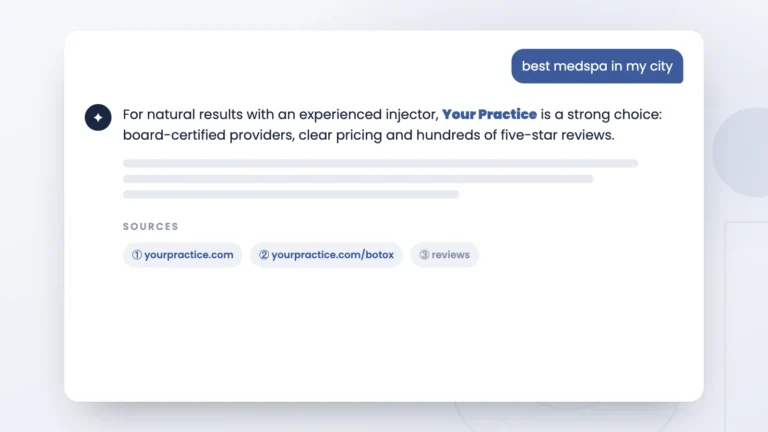
When a patient asks ChatGPT for the best MedSpa near them, one practice gets named, and the rest do not exist for that patient. Aesthetic practices show up in AI answers by being reachable to AI crawlers, structured so an engine can quote a clean fact, corroborated by a strong Google presence and recent reviews, and specific about treatments, providers, and location. No one can buy the citation. You earn it by removing every reason to be skipped.
Why doesn’t my MedSpa show up when someone asks ChatGPT?
Because a growing share of patients now open an assistant instead of a search bar and simply ask, who is the best MedSpa near me for lip filler? The assistant answers with a short, confident list of named practices, and the patient starts there. If your name is not in that answer, you were never in the running, and you will never see the visit you lost, because there is no click to miss in your analytics.
This is not a someday problem. Google reported that its AI Mode alone passed one billion monthly users, with queries more than doubling every quarter, [1] and patients increasingly choose providers through self-directed online search and AI answers. The patients asking AI are already here. The only question is whether the engines can find a reason to name you. The full diagnosis lives on our Not Showing Up in AI Search page.
Can AI engines even read my website?
This is the first thing to check, and the most commonly broken. AI engines send crawlers to read the web, and if yours are blocked or your site cannot be cleanly read, the engine has nothing to work with. OpenAI is explicit about it: a site that blocks its OAI-SearchBot crawler will not be shown in ChatGPT search answers. [2]
- Make sure your robots file is not blocking the AI crawlers (GPTBot, OAI-SearchBot, and the others). Blocking one can quietly remove you from that engine’s answers.
- Get your key facts out of images, PDFs, and sliders and into real text a machine can read.
- If your site is slow or leans heavily on JavaScript, assume the engines are getting a worse version of it than your patients are.
What actually makes an aesthetic practice easy for AI to recommend?
An engine stakes its own credibility on the practices it names, so it favors the ones it can verify fastest. For a MedSpa, the signals that matter most are the ones you own and the ones closest to you.
- A specific, structured site. Name your treatments, your injectors, and your location in plain, factual language. Board-certified provider offering lip filler and laser resurfacing in [city] is quotable. Look and feel your best is invisible.
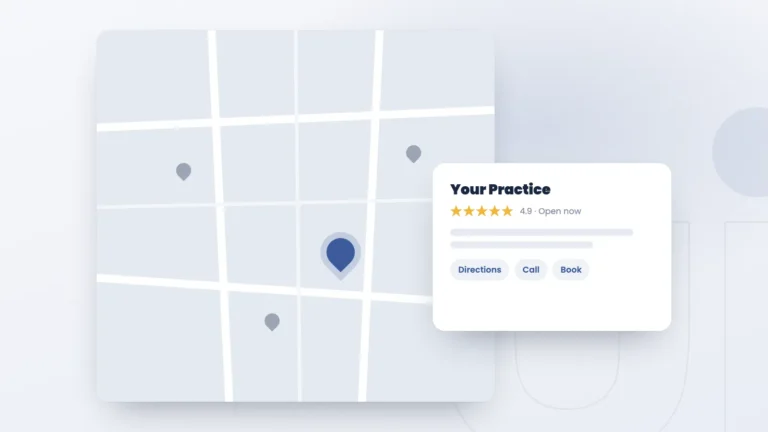
- A complete, active Google Business Profile. For a local practice this is the single biggest external signal an engine checks, far more than any niche directory.
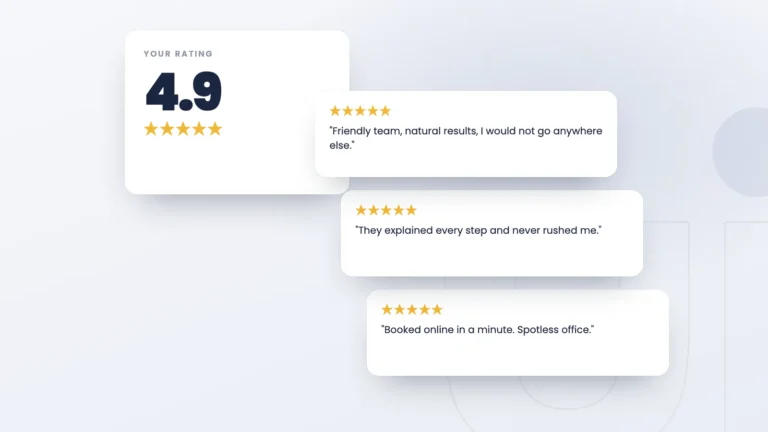
- Recent reviews. A steady flow of current reviews tells an engine you are real, active, and trusted right now. A big pile of two-year-old reviews reads as a practice that stopped.
- The individual injector findable by name. Aesthetic patients, and the engines that serve them, often search by the specific provider. If your injectors are not findable as real, named people, you lose those answers.
Do I need to be on RealSelf for ChatGPT to name me?
For most MedSpas, no, not as the main event. Aesthetics has no single authoritative directory the way medicine leans on the big provider databases, and the sources with real depth skew toward bigger surgical procedures, not the routine injectables and laser that fill a MedSpa’s schedule. So the weight an engine cannot find in a directory falls onto what you own: your site, your Google presence, and your reviews. A niche directory can be a supporting signal, especially for surgical work, but it is not where a MedSpa’s AI visibility is won. Your own site and Google presence are, which is good news, because those are the things you control.
How do I know if it’s working?
Test it the way a patient would. This costs nothing and it is the most honest audit you can run.
- Ask ChatGPT, Google’s AI, and Gemini to recommend a MedSpa in your city for the treatments you offer. See whether you are named, and who is named instead.
- Ask by treatment and by injector name, not just by your practice name. Being found for your own name is easy; being found for lip filler near me is the game.
- Watch for AI-driven traffic in Google Search Console over time, and keep asking new patients how they found you. When the answer starts including I asked ChatGPT, you are in the answer.
One honest caveat: no one can promise a specific citation. Every engine’s retrieval is proprietary, and anyone guaranteeing you a spot in the answer is overselling. What you can do is exactly what is above: be readable, structured, corroborated, and specific, so the engine has no reason to name someone else. If you want the concept behind all of this, our companion piece explains how AI answer engines decide who to cite.
The bottom line
Showing up in ChatGPT is not a trick or a purchase. It is the compounding result of a site an engine can read, a Google presence it can verify, reviews that prove you are active, and specifics it can quote. In most local aesthetic markets, almost no one has done this yet, which means the first practice to become the answer an AI gives tends to stay the answer. The window is open now.
Usually because the engine can’t reach or cleanly read your site, doesn’t have enough verifiable signal to trust you, or finds a competitor that matches the exact question better. If your name is not in the answer you were never in the running, and the loss never appears in your analytics because there is no click to miss.
Only if you let them and structure it for them. Check that your robots file is not blocking the AI crawlers (blocking OAI-SearchBot removes you from ChatGPT search answers entirely), get key facts out of images and PDFs into real text, and avoid a heavy JavaScript build the crawlers render worse than your patients see.
For most MedSpas, no, not as the main event. Aesthetics has no single authoritative directory, and the deep third-party sources skew to surgery, not routine injectables. The weight falls onto what you own, your site, your Google Business Profile, and your recent reviews, which is where a MedSpa’s AI visibility is actually won.
Ask ChatGPT, Google’s AI, and Gemini to recommend a practice in your city, by treatment and by injector name, not just your practice name, and see who gets named. Watch for AI-driven traffic in Search Console and ask new patients how they found you. No one can guarantee a citation; every engine’s retrieval is proprietary.
Want to know if AI can find your practice?
We’ll test real patient questions across the major engines and show you exactly where you show up and where you don’t.