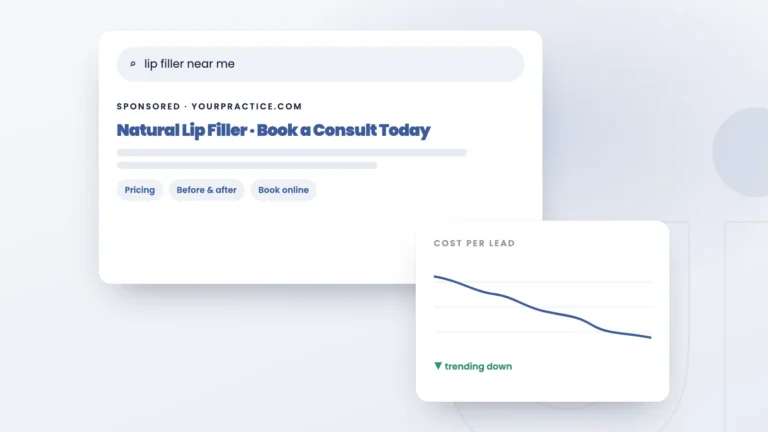
Across the eye-surgery search campaigns we run, a LASIK lead cost $8.40 and a cataract-surgery lead cost $10 over the last two years, counting only phone calls and completed request forms. The industry average for physicians and surgeons is $40.04. [1] LASIK searchers convert unusually well, most eye leads arrive by phone, and the practices that pay the most usually count things that are not leads.
What does a cataract or LASIK lead cost on Google Ads?
In the eye-surgery accounts we manage, Google Ads search produced more than 4,400 cataract leads at about $10 each and more than 1,700 LASIK leads at $8.40 each over the last two years. Implantable lens (ICL) leads cost $10.50 over the last six months.
The industry average for physicians and surgeons is $40.04 per lead. [1] A practice paying that is paying the going rate; at our numbers, the same budget brings in four to five times as many people asking about surgery.
Why do LASIK searches convert so well?
Over the last 12 months, 25.4% of clicks on our LASIK ads became a call or a form, double the 12.43% industry conversion rate for physicians and surgeons. [1] People searching for LASIK have usually decided they want it and are choosing where to go, so a clear page with price guidance, financing and an easy way to book a consultation turns that intent into a lead.
Cataract searches behave differently. Many come from older patients, or from family members researching for them, and they convert at a steadier 19%. They respond to reassurance about the surgeon, the lens options and what insurance covers, so the landing page has more explaining to do.
Why do most eye-surgery leads come in by phone?
Surgery is a big decision, and people want to hear a voice before they commit. In the eye accounts we manage, 82% of leads over the last 12 months were phone calls. That puts the front desk at the center of your marketing: a caller who reaches voicemail is a lead you paid for and may not get back. Our guide to training the front desk to convert phone calls covers the fixes.
It also means call tracking has to be set up properly. Google Ads counts a call as a conversion only when it lasts at least a minimum length you choose, [2] so set it high enough to filter out hang-ups.
What should count as an eye-surgery lead?
A real phone conversation or a completed consultation request. Eye-surgery accounts are especially prone to counting other things, such as visits to a location page, clicks on a phone number that never became a call, or “visited three pages” goals, because those actions are easy to track. Counted as conversions, they make the account look cheaper than it is and steer the bidding toward browsers. Every figure in this article counts calls and completed forms only.
How can you tell if your eye-surgery ads are overpaying?
- LASIK leads above $20 or cataract leads above $25. Our accounts ran at less than half of those levels over two years, and the industry average for physicians and surgeons is $40.04. [1]
- Fewer than one in eight clicks becoming a lead. That is roughly the 12.43% industry conversion rate. [1] LASIK campaigns should do far better.
- Cost per click above $4.76. That is the industry average for physicians and surgeons. [1] Our LASIK clicks averaged $2.30 and ICL clicks $1.41 over the last 12 months.
- Conversions that are not calls or forms. Location views, phone-number clicks and page-visit goals inflate the numbers.
- No call tracking, or a missed-call problem. With four in five leads arriving by phone, both cost you real patients.
What should an eye-surgery practice aim for?
Cataract and LASIK leads from Google search can cost around $10 when campaigns are split by procedure, the landing pages answer what each patient worries about, and the account counts only real leads. If you are paying near the $40 industry average, there is room to improve. To see how we market eye surgery, visit our ophthalmology marketing page.
About these figures: they come from the Google Ads accounts we manage for eye-surgery practices, as reported by Google Ads on November 15, 2026. Windows are stated with each figure. A lead is a phone call or a completed request form. Practices are not named. Results vary by market and competition, and past results don’t guarantee future results.
In the eye-surgery accounts we manage, a LASIK lead cost $8.40 over the last two years, counting only calls and completed forms. The industry average for physicians and surgeons is $40.04, so a LASIK campaign paying more than $20 a lead has room to improve.
About $10 in our accounts over the last two years, across more than 4,400 leads. Cataract campaigns convert at a lower rate than LASIK (19% against 25.4% over the last 12 months), which fits a decision that patients and their families research before calling.
Mostly they call. In our eye-surgery accounts, 82% of leads over the last 12 months were phone calls, which makes call tracking and a well-trained front desk essential.
No. The patients, questions and conversion rates are different: LASIK searchers converted at 25.4% in our accounts over the last 12 months and cataract searchers at 19%. Separate campaigns and landing pages let each one speak to the right patient and be bid on its own results.
Want to know what your eye-surgery leads really cost?
We’ll review your Google Ads account, check what it counts as a lead, and show you where the budget is leaking.