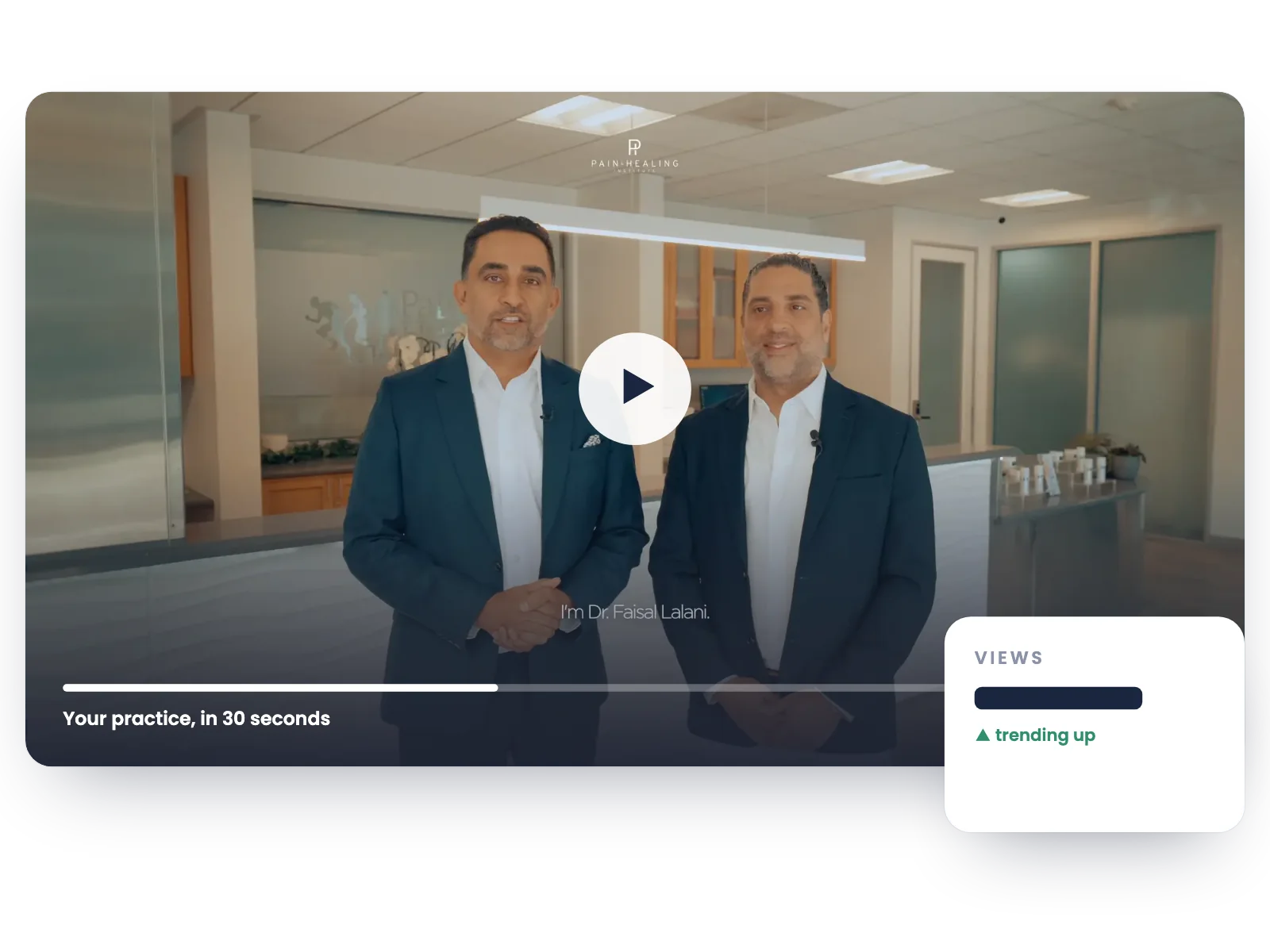
“Our experience with Urge was a complete transformation. From day one they were fully engaged, from revamping our website to social content, they delivered at every turn.”
Services · YouTube Advertising
YouTube Advertising for Medical and Aesthetic Practices
Your future patients are already watching. The only question is whose ad they see.
YouTube has billions of logged-in monthly users, and your patients are watching it on their phones, in their feeds, and increasingly on the biggest screen in the house. We help medical and aesthetic practices show up there with video built to be watched, not skipped, and pointed at the people most likely to book.
- In-stream, Shorts, and connected TV
- Video built to be watched, not skipped
- Intent-based Google targeting
- Marketing aesthetic practices since 2003
OVERVIEW
YouTube advertising places video ads on YouTube, bought through Google Ads, across skippable and non-skippable in-stream, Shorts, and connected TV. YouTube has billions of logged-in monthly users, and TV is now the main screen for YouTube viewing in the US. For medical and aesthetic practices, it builds awareness and trust through video, targeted by location, interest, and Google search intent, and works best paired with search for capture.
Why YouTube
YouTube isn't a video site anymore. It's where your patients spend their evenings.
The old picture of YouTube, kids watching clips on a laptop, is years out of date. Today it has billions of logged-in monthly users and has been the No. 1 streaming platform in US TV watch time for nearly three years, according to Nielsen.[1] The audience is everyone: decision-makers, high earners, and yes, the affluent patients a premium practice wants.
-
The bigger shift is where they watch. TV is now the main screen for YouTube viewing in the US, and YouTube alone accounted for a record 14.2% of all US TV time in July 2026, according to Nielsen.[2]
-
Your patient isn't squinting at a phone in line. They’re leaning back on the couch, watching YouTube on a 55-inch screen. That’s a fundamentally more premium, more credible place to appear than a crowded social feed, and most local practices haven’t shown up there yet.
-
The targeting is YouTube's quiet superpower. Because it’s bought through Google, you can reach people by location, age, interests, and even their Google search behavior. You can put your practice in front of someone in your city who’s been researching skin treatments.
-
No other video platform targets on intent like that. That’s what turns YouTube from a place to be seen into a place to be seen by the right people, near you, who are most likely to book.
Three ways to advertise on YouTube (and one thing that isn't this)
Most people lump “YouTube advertising” into one bucket. It’s really three surfaces, and using them well means treating them differently:
In-stream ads are the videos that play before or during what someone’s watching, on any screen. Skippable ones reward a strong first five seconds; non-skippable ones guarantee your whole message lands. This is the workhorse for awareness and consideration.
Shorts ads run in YouTube’s vertical, short-form feed, the TikTok-style surface. They’re efficient, native, and ideal for reaching younger patients and for repurposing the authentic, casual content your practice can make itself.
Connected TV is YouTube on the living-room television, the lean-back, big-screen experience. It’s the most premium, most credible surface, and it’s a brand and recall driver more than a click driver (you can’t tap a TV screen).
One honest clarification: “YouTube TV”, the live cable-replacement service with ESPN, CNN, and network channels, is a separate, enterprise-level product bought through a different system entirely, not where most practices start. When the living-room television screen is the goal, we handle it through connected TV advertising. This page is about advertising on YouTube itself. Knowing the difference is exactly the kind of thing that keeps your budget from going to the wrong place.
Creative is everything
On YouTube, the video is the whole game
Here’s the truth no platform brochure leads with: on YouTube, your creative decides everything. Google’s own data shows that creative drives roughly half of all incremental sales from ads, and that viewers decide whether to keep watching in the first few seconds.[3] You can target perfectly and bid smartly, but if the video doesn’t land, none of it matters. So the real question isn’t “should we advertise on YouTube,” it’s “what video are we going to run?” There are two honest answers, and the right one depends on your goals and budget.
When you want the premium, cinematic look
For your hero brand film, the polished spot that runs on connected TV and anchors your campaigns, you want real production. That’s its own craft, and it’s what our photography and video team does: cinematic, premium video built to make an affluent patient choose you on sight. It’s an investment, and it’s worth it when the goal is to look like the high-end choice. If that’s where you’re headed, that’s the conversation to have.
When you want authentic content you can actually sustain
Not every practice can or should commission a full cinematic production for everything, and on YouTube, you don’t have to. Especially on Shorts, authentic, real, lightly-produced content often outperforms glossy ads, because patients in medical and aesthetics want to see something that feels true: a real provider, a real space, a real result. The good news is you can make a lot of this yourself, and we’ll show you how (see below). The best YouTube strategies usually mix both: premium produced video where it counts, authentic content for trust and volume. We help you figure out the right blend for your budget, and we orchestrate all of it.
Addressing the real concerns about YouTube ads
"Won't people just skip my ad?"
Some will, and that’s fine, you usually don’t pay for a skipped skippable ad until someone watches enough to count. The real skill is the first five seconds: lead with the hook, not the logo. A strong open earns the watch, and the viewers who stay are the ones worth reaching. We build creative around that reality.
"Do I need an expensive video to advertise on YouTube?"
No. You need the right video for the goal. For a polished hero brand film, yes, production is worth it, and we handle that. But a huge amount of effective YouTube content, especially on Shorts, is authentic and lightly produced, the kind you can make yourself with a phone and good light. Most practices run a mix. We help you spend smart, not just spend big.
"Is YouTube actually going to bring me patients, or just views?"
Honestly, it depends on the goal, and we’re straight about it. YouTube is mostly an awareness and consideration engine, it builds the familiarity and trust that make patients choose you, especially on the TV screen where they can’t click. It works best paired with search and your website, which capture the demand it creates. We measure what it truthfully drives, views, lift, traffic, calls, and we don’t pretend a TV ad books a patient by itself.
"Isn't YouTube just for younger people?"
No. That stereotype is statistically wrong. YouTube reaches essentially every demographic with high efficiency, including older, higher-income decision-makers, exactly the patients many premium practices want. The targeting lets us focus on the right ages and audiences for your specialty.
What's included
How we run YouTube advertising
When we run YouTube for a practice, here's what that includes.
Surface and goal strategy.
Deciding which surfaces (in-stream, Shorts, connected TV) fit your goal, awareness, consideration, or driving traffic, and how they work together. A single-format plan leaves results on the table.
Intent-based targeting.
Using Google’s audience and search-intent data to reach the people near you most likely to book, by location, interest, and behavior.
Creative direction.
Guiding the video, whether that’s coordinating premium production or shaping the authentic content you create, so it’s built for the surface and the first-five-seconds reality.
AI-powered campaign management.
YouTube advertising is now deeply AI-driven. Google’s newest tools (Demand Gen, AI-assisted creative and bidding rolled out through 2026) can lift performance significantly when run by someone who knows how to steer them, and waste budget when left on autopilot. That steering is our job.
Honest measurement.
Tracking what each surface truthfully delivers, views, view rate, engaged views, brand lift, and the website visits and calls that follow, reported in plain language.
Coordinated with the rest of your marketing.
We coordinate YouTube with the rest of your marketing, because video that builds awareness works best when your search and website are ready to capture the patients it warms up.
Why Urge
Video that gets watched, run by people who know your patient
Anyone can upload a video. Getting it to bring you patients is a different skill.
Anyone can upload a video to Google Ads and let it run. Getting YouTube to actually bring a practice patients is a different skill, knowing which surface fits the goal, what makes an aesthetic patient stop scrolling, how to read the AI tools instead of trusting them blindly, and how to be honest about what video can and can’t prove.
Two decades marketing medical and aesthetic practices.
We’ve marketed medical and aesthetic practices since 2003, long enough to know that great video plus the right targeting plus honest measurement is what works, and that everything else is noise.
A Google Partner and a Meta Business Partner.
We’re a Google Partner and a Meta Business Partner, and we work month to month with a 30-day rolling engagement.
We'll always tell you the truth.
We’ll always tell you the truth about whether YouTube fits your goals, and what it’ll realistically take to win.
2003
marketing practices since
20+ years in medical and aesthetic.
How it works
Let's get your practice on screen, the right way
Surface and goal strategy
We decide which surfaces (in-stream, Shorts, connected TV) fit your goal, awareness, consideration, or driving traffic, and how they work together.
Intent-based targeting
We use Google’s audience and search-intent data to reach the people near you most likely to book, by location, interest, and behavior.
Creative direction
We guide the video, whether coordinating premium production or shaping the authentic content you create, built for the surface and the first-five-seconds reality.
AI-powered campaign management
We steer Google’s newest AI tools (Demand Gen, AI-assisted creative and bidding) so they lift performance instead of wasting budget on autopilot.
Honest measurement
We track what each surface truthfully delivers, views, view rate, engaged views, brand lift, and the website visits and calls that follow, in plain language.
How to make YouTube-ready video yourself (without a film crew)
Whether or not you ever hire us, this content genuinely works, especially for Shorts and authentic trust-building. A modern phone is a capable camera; the craft is in how you use it:
- Shoot vertical and shoot in good light. Hold the phone upright for Shorts, and film near a big window or in your brightest room. Soft, natural light flatters skin and space more than any filter, and bad lighting is the fastest way to look amateur.
- Lead with the hook in the first 3 seconds. People decide to keep watching almost instantly. Open with the result, the question, or the striking visual, not your logo or a slow intro. Earn the next five seconds.
- Let your providers talk like humans. The most trusted aesthetic content is a real provider explaining a treatment plainly, on camera, like they would to a patient. Authenticity beats polish here. Keep it short, warm, and real.
- Capture the real moments. The space, the calm, a treatment in progress (with consent and within your rules), a happy patient sharing their experience (with permission). This is the patient-style content that builds trust no stock footage can.
- Keep it short and keep it steady. Fifteen to thirty seconds is plenty for a Short. Prop the phone or use a small tripod so it isn’t shaky. Record several takes and keep the best.
- Stay inside the rules. In medical and aesthetics, be careful with claims, before-and-after content, and patient privacy. When in doubt, keep it about education and experience rather than promises.
If you build a steady stream of this, you’ve got real fuel for Shorts and authentic placements. And when you want the elevated, cinematic hero film to sit on top of it, that’s exactly what our production team is for. The honest answer for most practices is a mix, and figuring out that mix is part of what we do.
Selected work
Built for the kind of problem we solve
The channel is the same; the surface mix, the creative, and the patient questions are tailored to your specialty and your local market.
MedSpa
Authentic Shorts the practice can actually sustain
A vertical, hook-first content rhythm built around real providers and real moments, paired with intent-based targeting near the practice.
- YouTube Advertising
- Shorts
Plastic Surgery
The big screen, before the competitor down the block
A cinematic hero film on connected TV aimed at affluent households nearby, measured for the awareness and consideration it truthfully drives.
- YouTube Advertising
- Connected TV
Dermatology
Video that warms up the rest of the budget
In-stream and Shorts coordinated with search so the awareness YouTube builds is captured by the channels ready to convert it.
- YouTube Advertising
- Cross-channel
Results vary by practice and market. The work above is shown for the kind of problem we solve, not as a performance guarantee.

Prefer a human over a contact form?
Talk with a senior strategist who’s helped practices grow since 2003, no bots, no junior rep.
FAQ
YouTube Advertising questions, answered
YouTube advertising is running video ads on YouTube, bought through Google Ads. Formats include skippable and non-skippable in-stream ads, Shorts ads, and connected TV placements. Ads are targeted by location, age, interest, and Google search behavior.
Yes, primarily as an awareness and trust-building channel. YouTube has billions of logged-in monthly users, including affluent decision-makers, and lets practices target patients near them by interest and search intent. It works best paired with search advertising, which captures the demand video creates.
YouTube ads run on the YouTube video platform (in-stream, Shorts, and connected TV) and are bought through Google Ads. YouTube TV is a separate live cable-replacement service bought through a different, enterprise-level system. For the living-room television screen, Urge handles streaming reach through connected TV advertising.
Not always. A polished, cinematic hero film is worth producing for brand campaigns and connected TV, and Urge handles that through its photography and video service. But much effective YouTube content, especially Shorts, is authentic and lightly produced, which practices can create themselves with guidance. Most use a mix.
Because it is bought through Google, YouTube can target by geographic location, age, gender, interests, and Google search behavior, including reaching people who have researched related treatments. This intent-based targeting is a key advantage over other video platforms.
It depends on the goal. In-stream ads suit awareness and consideration, Shorts suit efficient reach and younger audiences, and connected TV suits premium brand-building on the big screen. Strong programs use several formats together rather than one.
We track views, view rate, engaged views, brand lift, and the website visits and calls that follow. YouTube is largely an awareness and consideration channel, so we measure it for what it truthfully delivers and do not claim it books patients on its own.
No. Urge engagements are month-to-month, with the only requirement being 30 days’ notice of cancellation.
Still have a question we didn't answer?
Send it over and a strategist will reply with a straight answer (and a tailored plan) within one business day.
Sources
Let's grow your practice
Let's get your practice on screen, the right way
We'll help you figure out which YouTube surfaces fit your goals, what video to run, and how to measure it honestly, then run it alongside the rest of your marketing so it actually drives patients.