The comparison is usually won or lost before anyone picks up the phone.
Losing patients to competitors is rarely about skill. Patients cannot judge your clinical ability from a search, so they compare what they can see: your brand, your proof, your website, and whether you show up in the comparison at all. Whichever practice signals quality and trust best usually wins, before the first call. Each of those signals is fixable.
You aren’t losing on skill. You’re losing the comparison.
Here is the uncomfortable truth about how patients choose. They cannot see how good your work is. They have not met you, they cannot evaluate your training, and they will not until after they book. So they decide on proxies: what your brand looks like, what other patients say, how your website feels, and whether you even appear next to the competitor they are also considering.
That means the practice that wins is often not the most skilled in the city. It is the one that signals quality and trust most clearly before the consult. Patients rarely compare just one option. They line up two or three, scan each one fast, and pick. Peer-reviewed research finds that what patients see online, especially the ratings, significantly shapes which provider they choose. [1] The comparison is real, it is quick, and you are losing it on a specific axis. Below is the map.
Six reasons the competitor wins the comparison
Reason 1: You look interchangeable, or worse, you look cheap
A patient forms a first impression of a website in about 50 milliseconds, and roughly 75% of people judge a business’s credibility on its design alone. [2][3] If your brand looks generic, dated, or discount, you lose the comparison before a word is read, especially in aesthetics, where patients are paying for taste. Looking premium is not vanity. It is the first evidence that you are worth the price.
- Generic or dated visual identity that signals interchangeable, or discount → Branding
- No clear positioning, so nothing tells a patient why you and not the practice next door → Branding / Marketing Strategy
Reason 2: Your proof is thinner than theirs
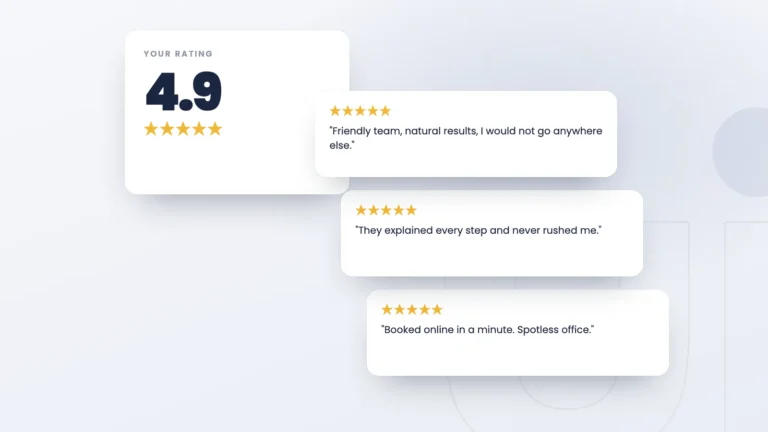
When two practices look comparable, patients break the tie on evidence: reviews, ratings, and results. A competitor with more recent reviews and visible before-and-afters is simply more believable, even if your work is better.
- Fewer, older, or weaker reviews than the competitor → deep dive: Weak Online Reputation, fixed by Reputation Management
- No before-and-afters or results a patient can actually see → Web Design & Development / Content Marketing
Reason 3: Your website is a worse experience than theirs
The website is the showroom. If theirs is fast, clear, and easy to book on, and yours is slow, dated, or confusing, the patient feels the difference as a difference in the practice itself.
- A dated, slow, or hard-to-book website next to a competitor’s better one → deep dive: Outdated or Underperforming Website, fixed by Web Design & Development
Reason 4: You aren’t in the comparison at all
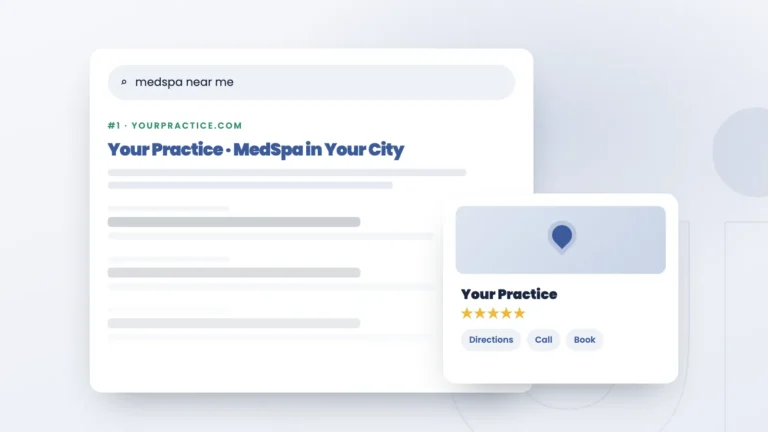
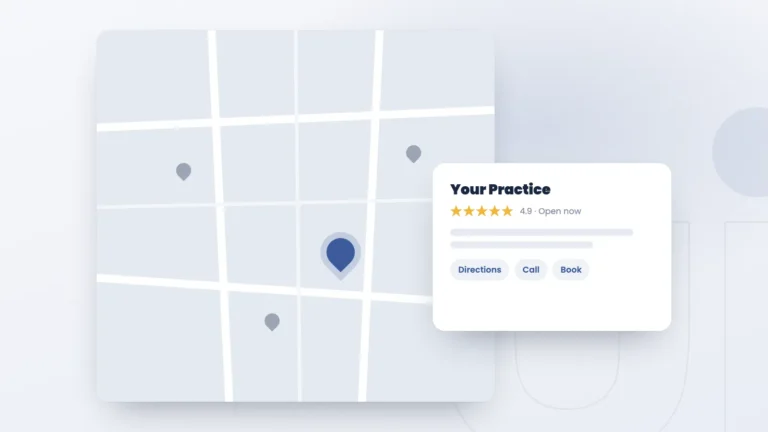
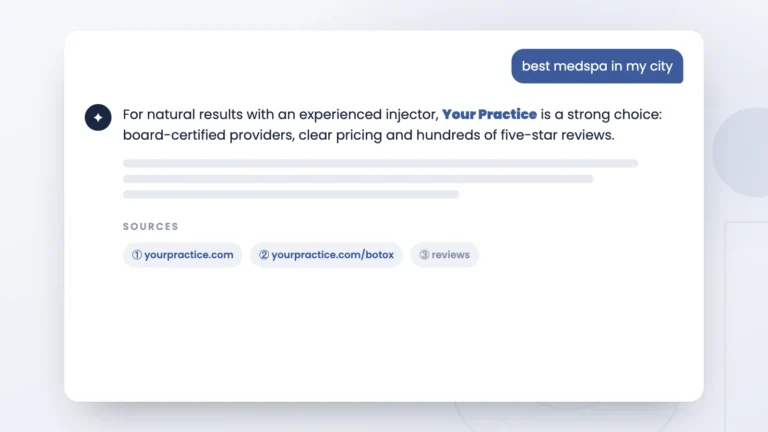
You cannot win a comparison you are not part of. If the competitor shows up in the map pack, the search results, and the AI answer and you do not, the patient never even weighs you. You lost without competing.
- Absent from local and organic search where the comparison happens → deep dive: Can’t Be Found Online, fixed by SEO / Local SEO
- Absent from the AI answer when a patient asks for a recommendation → deep dive: Not Showing Up in AI Search, fixed by AI Search Optimization
Reason 5: Competitors outspend or out-target you where the choice is made
Some competitors win by simply being more present at the deciding moment: bidding on the searches you should own, running ads against your category, and dominating the feed where aesthetic decisions form.
- Competitors capturing the high-intent searches you are absent from → Google Ads
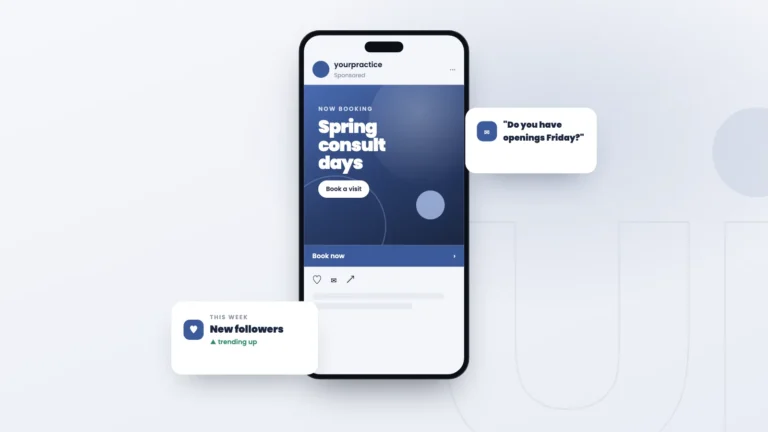
- Competitors owning the social feed where aesthetic demand and comparison happen → Facebook & Instagram Ads
Reason 6: You’re positioned for the wrong market
Sometimes the loss is a mismatch. A premium practice priced and branded like a discount one attracts price-shoppers who leave for a coupon. A value practice dressed up as luxury scares off the patients it should win. Positioning decides which patients you attract and whether they stay.
- A brand and price position that does not match the patients you actually want → Branding / Marketing Strategy
Medical and aesthetic patients compare on different things
The comparison is universal. What tips it is not.
Medical (dermatology, OB-GYN, dental, ophthalmology, general practice). The patient compares credentials, insurance and proximity, a complete provider profile, and reviews that speak to competence and comfort. You lose here on thin provider information and weak or scattered reviews.
Aesthetic (MedSpa, injectables, elective cosmetic). The patient compares results and taste: before-and-after proof, the specific injector, the brand feel, and reviews that describe the experience. For a MedSpa the comparison plays out mostly on Google and on your own site, so a premium brand, visible before-and-afters, and a strong Google presence are what win it. Look discount, and you lose the premium patient to the practice that looks the part.
What you can do yourself (start here, free)
Losing to a competitor is diagnosable if you are willing to look honestly.
- Compare yourself to your top competitor, side by side, as a patient would: brand, reviews, website, before-and-afters. Be honest about where they win.
- Ask your lost leads why they chose the other practice. The reason repeats, and it names your weakest axis.
- Write the one sentence that says why a patient should choose you, and make sure it is on your homepage. If you cannot write it, that is the problem.
- Get your proof visible: recent reviews and real before-and-afters, on your own site, not buried on a third-party profile.
- Make sure you are even in the comparison, by checking whether you appear in the map pack, the search, and the AI answer alongside that competitor.
Because patients cannot see your work before they book. They decide on what they can see: your brand, your reviews and results, your website, and whether you appear in the comparison at all. The competitor who signals quality and trust most clearly usually wins, regardless of who is actually more skilled. The fix is to close the gap on whichever signal you are losing on.
Quickly, and across a few options at once. Research shows what patients see online, especially the ratings, weighs heavily on the choice. They scan brand, reviews, results, and website, form a fast impression, and pick. If you are not in that set, or you look weaker on one axis, you lose the comparison.
Often both, but it starts with positioning. If nothing clearly says why a patient should choose you, every other channel is working against a blank. Branding sets the reason to choose you; the other channels carry it. That is why the root fix is usually positioning, then proof and presence.
Match the axes patients actually judge. In aesthetics that means a premium brand, visible before-and-afters, a strong and recent review presence, and a site that feels as good as the work. Flashier is not the same as better, but if your brand looks discount next to theirs, you lose the premium patient before the consult.
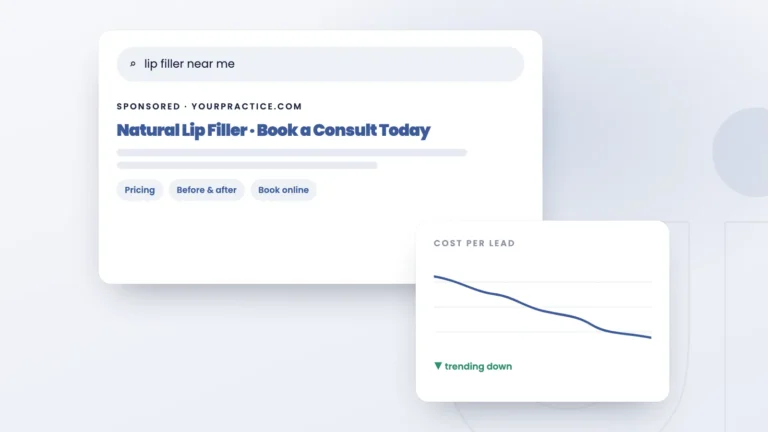
Two moves. Own your own name and category in search and the map pack so you are the obvious result, and consider paid search to defend the high-intent queries competitors are capturing. Being absent from your own comparison is the easiest patient to lose and the easiest to win back.
See exactly why patients pick the competitor, and fix it.
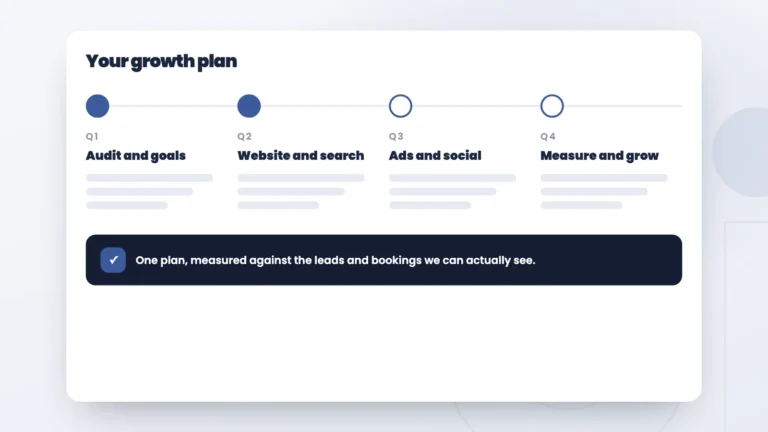
We’ll compare your practice to your real competitors the way a patient does, brand, reviews, website, and presence, show you which axis you’re losing on, and hand you the plan to win it.