It usually isn’t one bad review. It’s the system that lets your happiest patients stay silent.
A weak online reputation is rarely one bad review. It is usually a system problem: too few recent reviews, a rating dragged down by a vocal minority, feedback left unanswered, or replies that risk a HIPAA violation. Reviews decide both who books you and how you rank in local and AI search. Each weak point has a specific, fixable cause.
Your best work whispers, your worst day shouts
A patient looking for a new dermatologist, surgeon, or MedSpa does exactly what you do before booking a hotel. They read the reviews first.
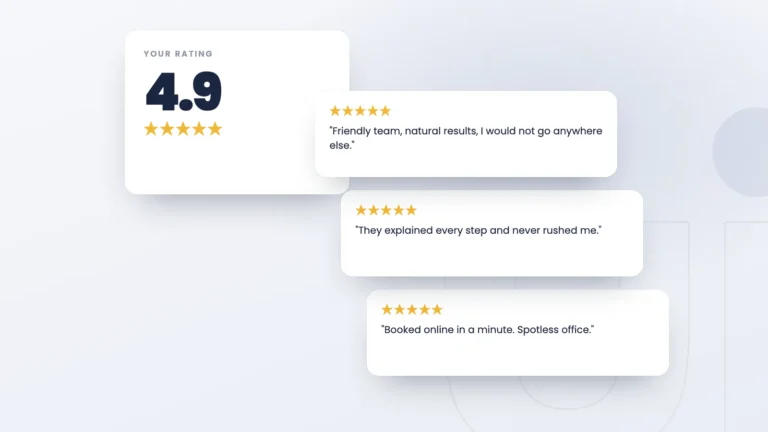
Here is the trap almost every practice falls into. The patients who love you say nothing, because happy people are busy being happy. The one patient who had a bad day writes three careful paragraphs. Left alone, your public reputation becomes a megaphone for your worst moment and a whisper for your best work.
That is not a reflection of your care. It is a reflection of having no system. Reputation is not luck, and it is not something that happens to you. It is built. And when it is weak, it is weak in specific, nameable ways, each with a different fix.
“Weak” isn’t one thing. Here’s what’s actually weak.
Below is the full diagnosis. We map all of it here and solve none of it on this page. Every line points to the service that fixes it.
Reason 1: Too few reviews, or reviews too old to count
Patients have hard thresholds, and they are stricter for a doctor than for a restaurant. Peer-reviewed research finds that online ratings significantly shape which provider a patient chooses: raising a provider from two to four stars sharply increased the odds of being picked. [2] Patients also favor recent reviews. A big pile of two-year-old reviews does not read as a strong reputation. It reads as a practice that stopped.
- No system for asking, so reviews trickle in by accident → Reputation Management
- The count is fine but the newest review is a year old → Reputation Management
- Too few reviews to clear the rating threshold patients quietly apply → Reputation Management / Local SEO
Reason 2: A rating dragged down by a vocal few
This is the asymmetry made numeric: a handful of loud one-stars against a silent, satisfied majority. The math is brutal because it is lopsided, and the only durable fix is volume of genuine positive reviews, not a war with the outliers.
- A few unanswered negative reviews set the whole tone → Reputation Management
- No steady flow of positive reviews to outweigh a bad day → Reputation Management
Reason 3: Scattered or absent across the platforms patients actually check
Patients do not check one site. They typically look across several before choosing a provider, and even after a personal referral, most still turn to online reviews to validate the recommendation. Strong on Google and invisible on the next platform is not a strong reputation. It is a gap a competitor fills.
- Reviews concentrated on one platform, thin or missing on the others patients check → Reputation Management / Local SEO
- Name, hours, or details inconsistent across profiles, which quietly erodes trust and ranking → Local SEO
Reason 4: Reviews sit unanswered, or get answered in a way that risks a HIPAA violation
Unanswered reviews read as a dormant practice, to patients and to Google alike. But the sharper danger is the reply itself. In healthcare, the instinct to defend yourself with the facts of a visit is a federal violation. Two dental practices paid the HHS Office for Civil Rights $10,000 and $23,000 for disclosing patient information in responses to online reviews. [3] The full playbook is below, because this is where a well-meaning practice does the most damage.
- Reviews left unanswered, signaling an inactive practice → Reputation Management
- Responses that confirm care details, or even that the person is a patient, exposing you to an OCR penalty → Reputation Management
Reason 5: Your best reviews are buried where nobody, and no engine, sees them
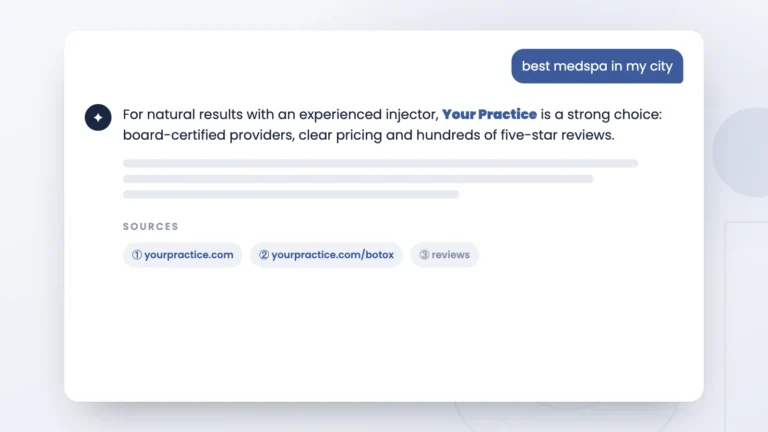
Great reviews sitting only on a third-party profile do three-quarters of nothing. They do not build trust on your own site where a hesitating patient is deciding, they are not surfaced to feed your local prominence, and they give an AI answer engine no corroborating source on your own domain to cite.
- Five-star reviews trapped on a third-party site, absent from your website and marketing → Web Design & Development / Content Marketing
- No structured, on-site proof for an AI engine to read and cite → AI Search Optimization
Reviews are two things at once, trust and ranking
Most practices file reviews under reputation and stop there. Reviews are also how you get found.
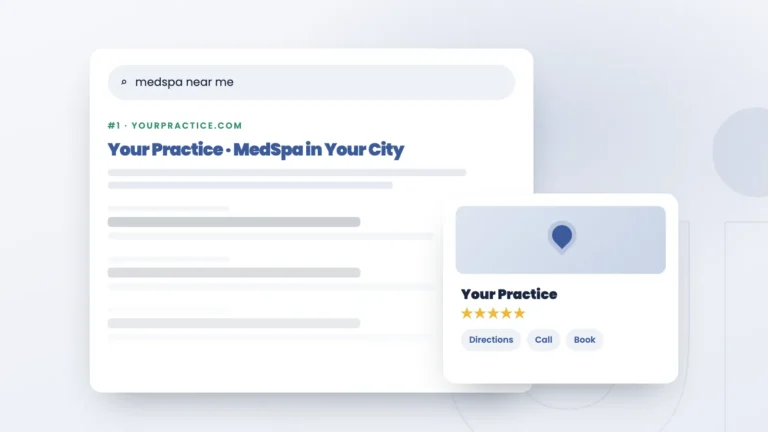
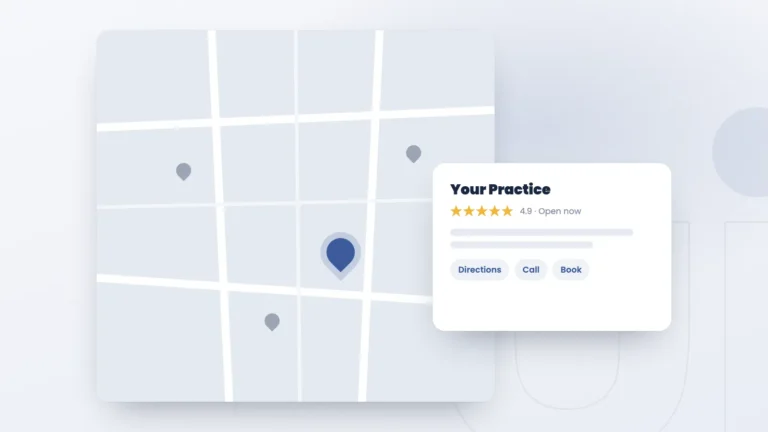
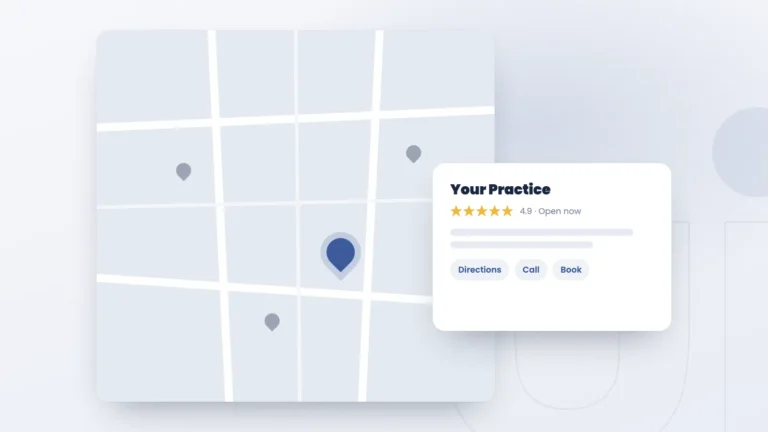
Google says plainly that local results run on relevance, distance, and prominence, and that more reviews and positive ratings can help your local ranking, with recency part of the picture. [1] Prominence is the lever you can actually pull, and reviews are one of its strongest inputs. And the AI answer engines lean on the same review corpus to decide whether they trust you enough to name you.
So a weak reputation does not only lose the patient who reads a bad review. It loses the patients who never find you at all, because you did not rank in the map pack (see Can’t Be Found Online) and were not cited in the AI answer (see Not Showing Up in AI Search). Reviews and findability are the same conversation.
Yes, you can respond. The line is sharp, and crossing it is expensive.
This is the section most agencies cannot write, because they do not live in medical. Responding to reviews is not just good manners, it is a legal minefield, and the mines are real.
In 2019, a Texas dental practice paid OCR $10,000 after disclosing a patient’s information in a response to a Yelp review. In 2022, a California practice paid $23,000 for the same category of mistake, replying to reviews with protected health information. [3] The regulator’s message is not subtle: a provider cannot disclose protected health information when responding to an online review.
Here is the part that catches good people. You do not have to reveal a diagnosis to break the rule. Simply confirming that someone is your patient can be the violation, even when they named themselves in the review first. So the instinct to set the record straight, actually, you came in for X and we recommended Y, is exactly the instinct that writes the check to OCR.
The safe pattern is simple once you know it. Respond promptly and warmly, never confirm care details or that the person is a patient, and move every specific offline. Something like: we take this seriously and would love the chance to make it right, please call our office directly. It protects the patient, protects you, and reads to every future patient scrolling past as a practice that handles criticism with grace. Building that response approach with HIPAA in mind, on every review, is Reputation Management.
Growing reviews the right way (asking is allowed, these things are not)
The single biggest lever is also the simplest: ask, consistently, right after a great visit. But the rules around asking are stricter than most practices realize, and the penalties are federal.
The FTC’s 2024 rule on fake reviews bans buying or incentivizing reviews written for a chosen sentiment, positive or negative, bans fake and AI-generated reviews, and bans using threats to suppress a real negative review. [4] Separately, Google’s own policy prohibits review gating, the practice of soliciting reviews only from your happy patients while steering the unhappy ones away. Both are common, and both put your profile, and sometimes your practice, at risk.
- Offering a discount or gift for a review, which violates the FTC rule → Reputation Management
- Asking only patients you know are happy (review gating), which violates Google’s policy → Reputation Management
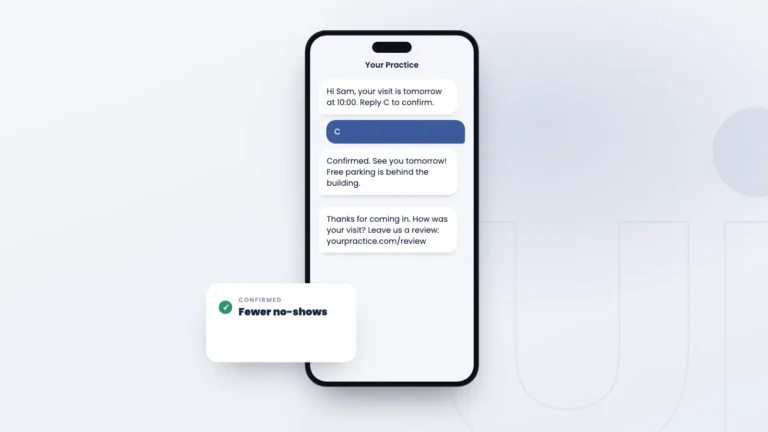
- Automating the ask to everyone, at the happy moment, within the rules, the compliant way to grow → Reputation Management / Marketing Automation / Text Marketing
The compliant ask is not weaker. It is stronger, because a steady stream of genuine reviews outperforms a small pile of coached ones, and it never blows up.
Medical and aesthetic reputations aren’t judged the same way
One reputation problem, two very different buyers. We tune the approach to the right one.
Medical (dermatology, OB-GYN, dental, ophthalmology, general practice). The patient is vetting competence and comfort. Credentials, a complete provider profile, and reviews that speak to bedside manner and outcomes carry the decision, and patients use those reviews to validate even a personal referral. [2] Recency and consistency across the sites they check matter most here.
Aesthetic (MedSpa, injectables, elective cosmetic). The patient is judging experience and results. Reviews that describe the actual experience, before-and-after proof, and the specific injector being reviewable by name carry the most weight. For a MedSpa this reputation lives primarily on Google and on your own site, not on a niche marketplace you do not control. RealSelf plays a supporting part, and mainly for bigger surgical procedures. Market a MedSpa like a hospital and you will collect the wrong reviews for the wrong search.
What you can do yourself (start here, free)
We would rather run this for you, because a compliant, consistent review engine is more work than it looks. But if you are not there yet, do these, in this order.
- Claim and complete your Google Business Profile. It is where most patients read first, and it is free.
- Ask every happy patient, consistently, right after the visit. Never offer an incentive, and never ask only the patients you know are happy.
- Respond to every review, fast. Never confirm care details or that the person is a patient. Move specifics to a phone call.
- Keep it fresh. A steady trickle of recent reviews beats a big stale pile, because patients discount anything over a year old.
- Surface your best reviews on your own site, where a hesitating patient is deciding and where an AI engine can read them.
None of this is proprietary. It is just rarely done consistently, and never done consistently by a front desk that is also running a practice.
Usually one or more of five things: too few reviews, reviews too old to count, a star rating dragged down by a vocal minority, reviews scattered or missing across the sites patients check, and reviews left unanswered or answered in a way that risks a HIPAA violation. Each has a different fix, so the first step is naming which ones you have.
Yes. Google states that local results are based on relevance, distance, and prominence, and that more reviews and positive ratings can help your local ranking. A steady, recent flow of reviews strengthens that prominence signal, which is part of why a practice with fewer fresh reviews can outrank one with a big but stale pile.
Yes, but carefully. You cannot disclose any patient information, and even confirming that someone is a patient can be a violation, even if they named themselves first. Two dental practices paid OCR $10,000 and $23,000 for getting this wrong. The safe reply is prompt and warm, confirms nothing about the person’s care or status, and moves every specific to a private phone call.
Asking is allowed and it is the single biggest lever. What is prohibited is offering an incentive for a review, soliciting reviews written for a particular sentiment, or suppressing negatives with threats, all barred by the FTC’s 2024 rule, and asking only your happy patients, known as review gating, which violates Google’s policy. The compliant approach is to ask everyone, consistently, right after the visit.
Do not panic, and do not argue the facts in public, that is how HIPAA violations happen. Reply with composure and move it offline, flag the review for removal if it clearly breaks the platform’s policy, and above all keep your stream of genuine positive reviews flowing so one unfair outlier does not define you.
Somewhat. The mechanics are the same, but the buyer is different. A medical patient vets competence and comfort and validates a referral with reviews. An aesthetic patient judges experience and results, and leans on reviews that describe the experience, before-and-after proof, and the specific injector. For a MedSpa, that reputation lives mostly on Google and your own site rather than a niche marketplace.
See what your reputation looks like to your next patient.
We’ll pull your reviews across the platforms patients actually check, show you where you’re strong, where you’re exposed, and where a single reply could put you at legal risk, and give you a plain plan to fix it.