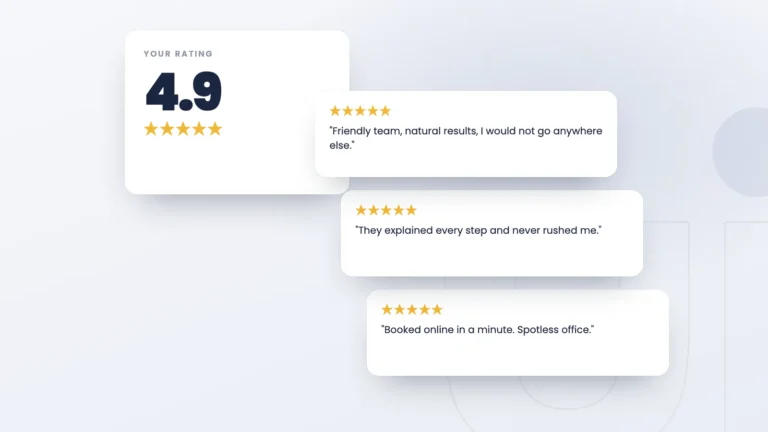
Reviews move local rankings, but recency matters as much as the rating. Google counts reviews and positive ratings as part of local prominence, and patients discount reviews older than a year. The practices that rank are not the ones with the most reviews. They are the ones with a steady, recent flow, earned by asking every happy patient, consistently, right after the visit, within the platforms’ rules.
Do reviews really affect my local Google ranking?
Yes, and Google says so directly. It states that local results are based on relevance, distance, and prominence, and that more reviews and positive ratings can help your local ranking. [1] Distance you cannot change and relevance is set by your content, so prominence is the lever you can actually pull, and reviews are one of its strongest inputs. A practice that quietly collects genuine reviews outranks one sitting still, in the map pack and in the answers AI engines build on top of it.
Why does recency matter as much as the star rating?
Because a review has a shelf life, to patients and to the algorithm. Patients favor recent reviews over old ones, and a fresh, steady stream signals an active, trusted practice. So a big pile of two-year-old five-stars does less than a small, fresh stream. A recent flow signals a practice that is active and trusted right now, which is exactly the signal both a patient and Google are looking for.
- Do not treat reviews as a one-time project. A burst of thirty reviews this month, then silence, ages out.
- A steady trickle, a few genuine reviews every week, beats an occasional flood.
- The newest review on your profile is a quiet status update. Make sure it is recent.
What’s the right cadence for asking?
The best cadence is simple: ask every satisfied patient, consistently, at the moment they are happiest, which is usually right after a great visit. The mistake is leaving it to whenever the front desk remembers, because on a busy day, they will not.
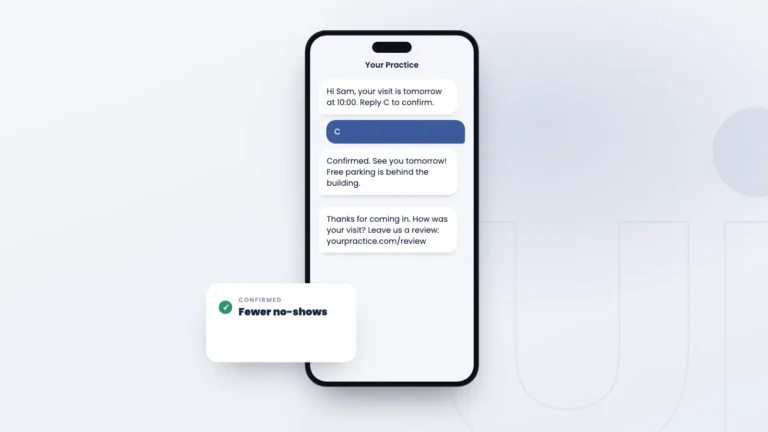
- Ask at the peak. The right time is immediately after the visit, while the good feeling is fresh, not a week later.
- Ask everyone, every time. Consistency is the whole game. A small, reliable percentage of a steady stream of asks compounds into a steady stream of reviews.
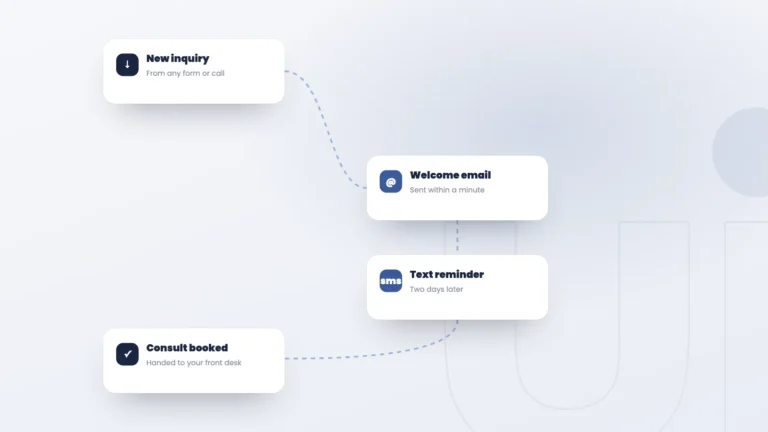
- Automate the reminder, keep the ask human. A system that prompts every eligible patient means the cadence does not depend on memory. The message can still feel personal.
- Spread them sensibly. A healthy presence on Google, with support on the platforms your patients actually use, reads as more credible than everything piled on one profile.
How do I ask without breaking the rules?
Asking is allowed and encouraged. A few things are not, and they carry real penalties. The FTC’s rule on reviews bans offering incentives for reviews written to a particular sentiment and bans suppressing negative reviews with threats. [2] Separately, Google’s own policy prohibits review gating, the practice of asking only your happy patients while steering unhappy ones away.
- Do not offer a discount or gift in exchange for a review. That crosses the FTC line.
- Do not filter who you ask based on how happy you think they are. Ask everyone; that is what keeps it compliant and, over time, keeps your rating honest and strong.
- Do not argue with or threaten a negative reviewer to get it removed. Respond with composure and move specifics offline.
Should I respond to the reviews too?
Yes. Responding signals an active, engaged practice, which supports both trust and ranking, and a graceful reply to a hard review reassures every future patient who reads it. One important caution for medical and aesthetic practices: never disclose patient information in a reply, and never confirm that someone is your patient, even if they named themselves. That is a HIPAA line with real settlements behind it, and the safe pattern is to respond warmly, confirm nothing, and take the specifics to a private call. The full response playbook lives on our Weak Online Reputation page.
The bottom line
Reviews are not a reputation task you finish. They are a rhythm you keep. The practices that own their local market are the ones with a steady, recent flow of genuine reviews and a calm, professional response on every one. Set the cadence, automate the reminder, keep the ask compliant, and the ranking follows the freshness.
Yes. Google states that local results are based on relevance, distance, and prominence, and that more reviews and positive ratings can help your local ranking. Distance and relevance are largely fixed, so prominence is the lever you can pull, and a steady flow of genuine reviews is one of its strongest inputs, in the map pack and the AI answers built on top of it.
Because a review has a shelf life to both patients and the algorithm. Patients discount reviews older than a year, and a fresh, steady stream signals a practice that is active and trusted right now. A big pile of two-year-old five-stars does less than a small, current flow.
Ask every satisfied patient, consistently, right after the visit while the good feeling is fresh. A few genuine reviews every week beats an occasional flood. Automate the reminder so the cadence does not depend on a busy front desk remembering, and keep the ask itself human.
Never offer a discount or gift for a review (the FTC rule bans incentivized-sentiment reviews and threat-based suppression of negatives), and never ask only the patients you think are happy, which is review gating and violates Google’s policy. Ask everyone, every time; that is what keeps it compliant and keeps your rating honest.
Want a steady stream of five-star reviews on autopilot?
We’ll set up a compliant, automated review cadence and handle the responses, HIPAA-aware, so your reputation compounds without your front desk having to remember.