A consultation that closes is not a hard sell. It is a structure. Patients say yes when they feel understood, when the recommendation clearly fits what they actually want, and when the next step is easy. A repeatable framework, connect, understand, educate, recommend, address concerns, and make it easy to start, converts far more consults than charisma or pressure, and it feels better for everyone in the room.
Why do good consultations still not convert?
Because most consultations are unstructured. A skilled provider walks in, talks about the treatment, quotes a price, and hopes. The patient, who arrived a little nervous and a little skeptical, never quite felt heard, never fully understood the recommendation, and left to think about it, which usually means to slowly cool off. The problem is rarely the provider’s skill or the treatment. It is the absence of a structure that guides the patient from uncertain to confident. That structure is trainable, and it is the difference between a consult that closes and one that drifts. It is also where the competitor comparison is finally won or lost.
What’s the right structure for a consultation?
Use a simple, repeatable arc. It works for injectables, surgery, and everything in between, because it follows how people actually make a decision.
- Connect first. Before anything clinical, build a little rapport and lower the guard. A patient who feels comfortable tells you what they actually want.
- Understand before you recommend. Ask what brought them in, what bothers them, and what they are hoping to feel afterward. Listen more than you talk. You cannot recommend well until you understand deeply.
- Educate, honestly. Explain their options in plain language, including trade-offs. Patients trust a provider who tells them what will not work as readily as what will.
- Recommend clearly. Give a specific, confident recommendation tied to what they told you they wanted. Based on what you said about X, here is what I would do, and here is why.
- Address concerns directly. Invite the objections, price, downtime, fear, and answer them calmly. An unspoken concern is a silent no.
- Make starting easy. End with a clear, low-friction next step, a booked treatment, a scheduled follow-up, or a simple path to yes. Never end on let us know.
How do I handle the price conversation in the room?
Not by avoiding it, and not by leading with it. Price lands well after the patient understands the value and feels the recommendation fits them.
- Establish value first. By the time you discuss price, the patient should already understand what they are getting and why it fits their goal.
- State it plainly and confidently. Hesitation around price reads as doubt about worth.
- Offer a path, not just a number. Financing options or a phased plan can turn a not right now into a yes, starting here.
What do I do when they say “I need to think about it”?
Treat it as a real concern, not a rejection, and do two things: surface what is actually behind it, and make sure the follow-up actually happens.
- Ask, gently, what specifically they want to think about. Often it is one concern you can address right there.
- Agree on a concrete next step and a time, so thinking about it has a date, not a void.
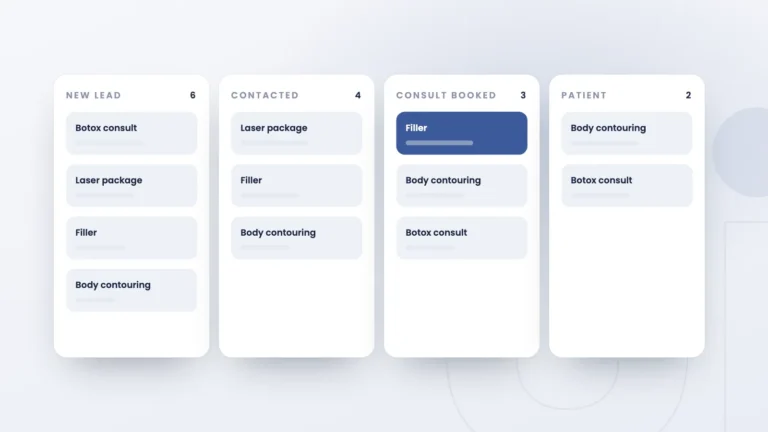
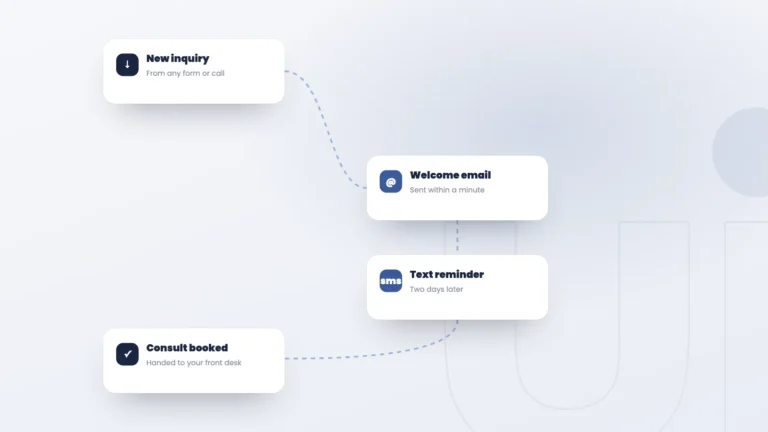
- Make sure a warm follow-up is scheduled and actually goes out. Most patients who leave undecided are not gone, they are distracted, and a system that follows up recovers a real share of them. This is exactly where automated follow-up earns its keep.
How do I follow up without being pushy?
By being helpful, not persistent. The goal is to stay useful and easy to say yes to, not to nag.
- Follow up promptly while the consult is fresh, then space it out.
- Lead with value, a helpful answer to their concern, a relevant before-and-after, a gentle reminder of the plan, not just are you ready yet?
- Make it effortless to rebook, one reply or one tap, so a patient who has decided does not have to work for it.
The bottom line
Patients do not book because they were pressured. They book because they felt understood, the recommendation clearly fit, and saying yes was easy. Give every consultation the same structure, connect, understand, educate, recommend, address concerns, and make it easy to start, and make sure the follow-up is systematic. The close stops being about charisma and becomes about care, done consistently.
Usually because they are unstructured. A skilled provider talks about the treatment, quotes a price, and hopes, while the patient never quite felt heard or fully understood the recommendation, and left to think about it. The fix is rarely more skill; it is a repeatable structure that guides the patient from uncertain to confident.
A simple, repeatable arc: connect first to lower the guard, understand what they actually want before recommending, educate honestly including trade-offs, recommend clearly and specifically, address concerns directly, and make starting easy with a low-friction next step. Never end on let us know.
After value, not before. By the time you discuss price the patient should already understand what they are getting and why it fits their goal. State it plainly and confidently, and offer a path such as financing or a phased plan rather than just a number.
Treat it as a real concern, not a rejection. Ask gently what specifically they want to think about, agree on a concrete next step and a time, and make sure a warm follow-up is scheduled and actually goes out. Most undecided patients are distracted, not gone, and a follow-up system recovers a real share of them.
Want the “I’ll think about it” patients to actually come back?
A great consult still needs a system behind it. We build the automated follow-up that recovers undecided patients and the brand that makes the yes easier before they ever walk in.