It’s either not working, or it’s working and you can’t see it. The fix depends on which.
Marketing that doesn’t show results means one of two things: it genuinely isn’t working, or it is and you cannot see it. The first is usually a strategy or funnel problem. The second is a measurement problem, tracking vanity metrics instead of the ones tied to bookings. In healthcare, honest attribution has real limits. Knowing which problem you have is the whole fix.
“It’s not working” and “I can’t see it working” are different problems
Before you spend another dollar, separate two things that feel identical from the owner’s chair. One is that the marketing genuinely is not producing patients. The other is that it is producing patients and you have no way to see it, so it feels like a failure. These look the same on a bank statement and have opposite fixes, so guessing which one you have is how good marketing gets cut and bad marketing gets more budget.
Most practices have some of both. Below is how to tell them apart, and the honest truth about what any agency can and cannot actually prove, which is the part almost no one will say out loud.
Six reasons the results aren’t showing
Below is the diagnosis. Every part routes to the fix.
Reason 1: There’s no strategy, so nothing compounds
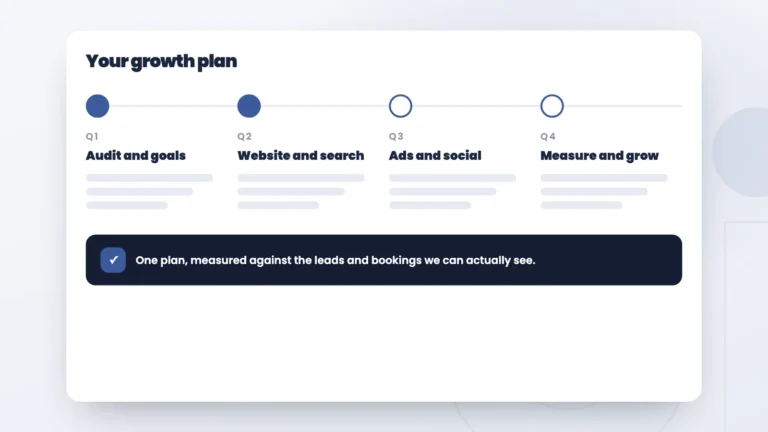
This is the it isn’t working root cause. A dozen disconnected tactics, each launched on its own, never build on each other, so the effort scatters and the money leaks. Marketing only produces visible results when the pieces pull in one direction over time.
- Random acts of marketing with no unifying plan → Marketing Strategy
Reason 2: You’re measuring vanity metrics, not the ones tied to bookings
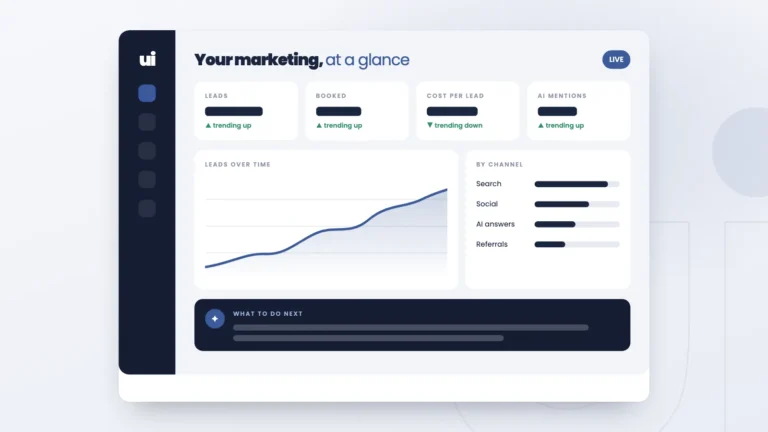
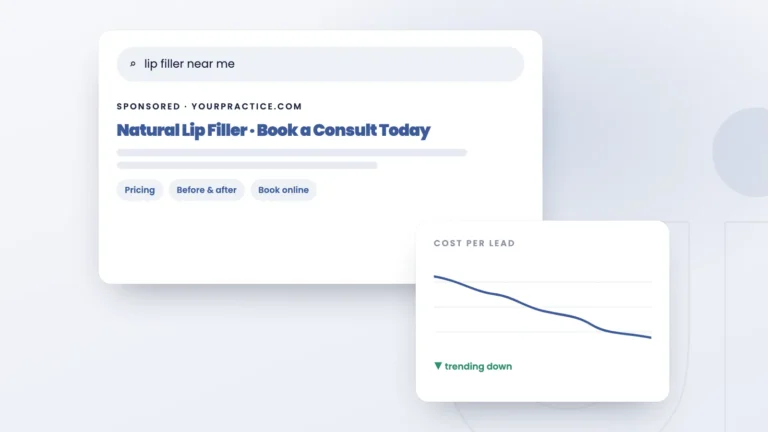
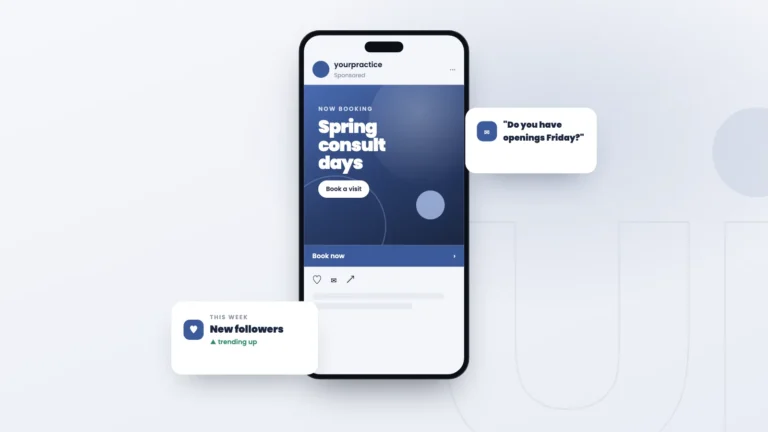
This is the I can’t see it root cause. If the report is full of likes, impressions, and followers, it can look busy and prove nothing. Results show up in the metrics that sit closest to a booked patient: calls, form fills, qualified leads, consult requests, and cost per lead. Measure those, and the picture usually gets clearer fast.
- Reporting on reach and engagement instead of leads, calls, and consults → Marketing Strategy
Reason 3: The channels contradict each other, so the spend leaks
When the homepage says one thing, the ad says another, and the promotion had no season behind it, every channel works against the others and the budget drains across the seams. Coherence is not cosmetic. It is what makes marketing add up instead of cancel out.
- Disconnected messaging and visuals across channels → Marketing Strategy / Branding
Reason 4: There’s no tracking, so you’re flying blind
You cannot see results you never instrumented. Without call tracking, form tracking, and a way to tag where a lead came from, the practice has no idea which channel is working, so everything looks equally uncertain and the budget gets spread by guess.
- No call tracking, form tracking, or source attribution in place → Marketing Strategy / Lead Management / Web Design & Development
Reason 5: The marketing works, but the funnel downstream leaks
Sometimes the marketing is doing its job and the result dies later. The ads bring qualified leads that slip through the front desk, or visitors who find you and pick a competitor. It looks like marketing that doesn’t work, but the leak is downstream, and pouring more into the top just fills a leaking bucket faster.
- Good marketing lost to a downstream leak → deep dive: Leads Slipping Through the Front Desk and Losing Patients to Competitors; the whole funnel view is Not Enough New Patients
Reason 6: The last agency sold you a dashboard, not the truth
The most common and most cynical version: a pretty monthly report full of numbers that go up and mean nothing, or worse, a claim to have driven a specific number of booked patients that the agency has no way to actually know. Impressive reporting that does not map to revenue is how underperforming marketing survives.
- Vanity reporting or overclaimed attribution that can’t be true → Marketing Strategy (honest reporting)
The honesty about attribution most agencies won’t tell you
Here is the part that matters, and the part you should demand from anyone you pay. In healthcare, the final step, the patient who actually booked, showed up, and paid, usually lives in your EMR or practice-management system, which marketing tools generally cannot see. That is a real, structural gap. So any agency that claims to tie every ad dollar to a specific paid patient, without access to that data, is either guessing or overstating, and you should treat the number accordingly.
What can be measured honestly is a lot: search rankings and visibility, website traffic and behavior, calls (where call tracking is in place), form fills and qualified leads, cost per lead, and booked appointments where your team logs them. We report those, we tell you plainly where the measurable trail ends and your EMR begins, and we help you close that last mile where it is possible. Honest reporting that admits its limits is worth far more than a confident dashboard that quietly makes numbers up. That honesty is the whole difference between marketing you can trust and marketing you just hope is working.
What good reporting actually looks like
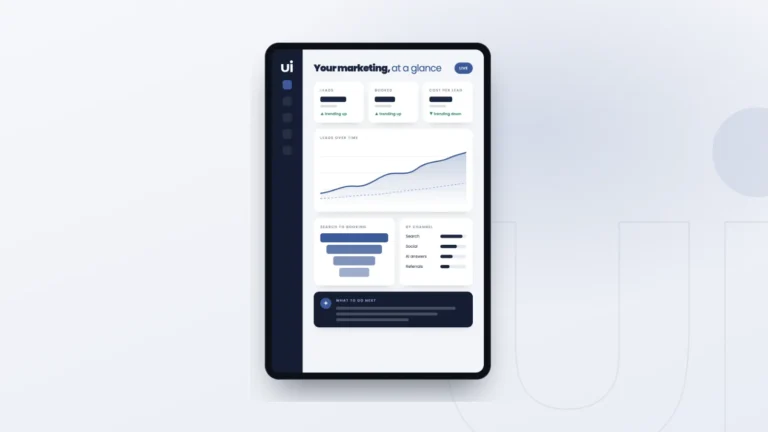
Good reporting is not more numbers. It is the few that matter, read on a regular cadence, and tied to the direction of the business rather than to vanity. It tells one story: here is the focus we set, here is what it produced in leads and consults, here is what it cost, and here is what we are changing next. It is the difference between a report you file and forget and a steering wheel you actually use. That reporting is a core part of a real Marketing Strategy, not a PDF bolted on at month’s end.
Medical and aesthetic results show up differently
The measurement is the same. The pattern differs.
Medical (dermatology, OB-GYN, dental, ophthalmology, general practice). Demand is steadier, so results show up as a consistent, measurable flow of calls, form fills, and booked consults over time. The common failure is no tracking, so a working channel goes unrecognized.
Aesthetic (MedSpa, injectables, elective cosmetic). Revenue is more elastic and promotion-driven, so results move with seasons, offers, and demand generation. The common failure is measuring the promo’s likes instead of its bookings, and missing that the quiet retention automations are often the highest, most measurable return.
What you can do yourself (start here, free)
You can separate the two problems yourself, without an agency.
- Define what a result means to you, in one sentence. Booked patients? Revenue direction? Cost per lead? If you cannot name it, no report can show it.
- Turn on call tracking and form tracking, so every channel’s leads can be counted instead of guessed.
- Ask every new patient how they found you, and log it. It is the cheapest attribution you have.
- Look at whether your channels tell one story. Open your homepage, your latest ad, and your social side by side. If they contradict, that is a leak.
- Demand revenue-direction reporting from anyone you pay, and be suspicious of any claim to prove booked patients they have no data to see.
Usually one of two reasons, and they are opposite. Either the marketing genuinely is not working, often because there is no coherent strategy and the tactics do not compound, or it is working and you cannot see it, because you are tracking vanity metrics or nothing at all. The first step is figuring out which one you have, because they have different fixes.
Only up to a point, and you should be wary of anyone who says otherwise. The final booked-and-paid step usually lives in your EMR, which marketing tools cannot see. What can be measured honestly is rankings, traffic, calls, form fills, qualified leads, cost per lead, and booked appointments your team logs. Anyone claiming perfect closed-loop attribution without your EMR data is guessing.
The ones closest to a booked patient: qualified leads, calls, form fills, consult requests, and cost per lead, read on a regular cadence and tied to the direction of your revenue. Likes, impressions, and followers can be context, but on their own they are vanity, and a report full of them proves nothing.
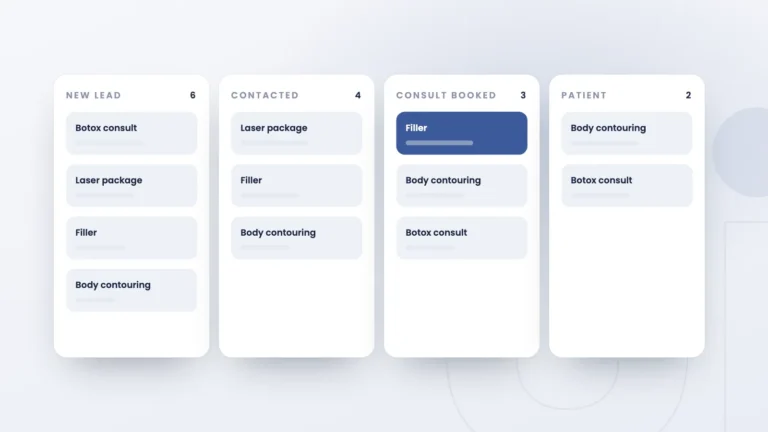
That is the classic sign the leak is downstream. The marketing may be producing leads that then slip through the front desk, or visitors who find you and choose a competitor. The report is measuring the top of the funnel while the loss happens lower down. Fixing more marketing will not help; fixing the leak will.
No. More numbers can hide the truth as easily as reveal it. Good reporting is a few metrics that matter, tied to revenue, read on a cadence, and honest about what it cannot see. A confident dashboard that overclaims attribution is worse than a plain one that tells you the truth.
Find out whether your marketing is failing, or just invisible.
We’ll audit what you’re spending, what’s actually measurable, and where the results are hiding or leaking, and give you honest reporting tied to bookings instead of vanity metrics.